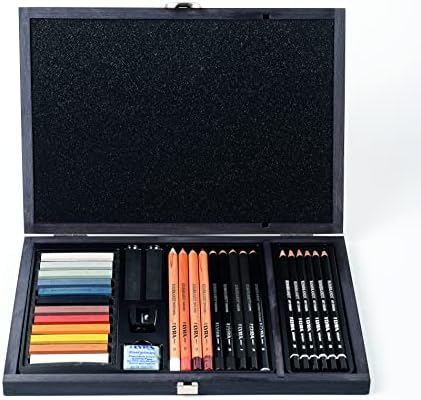
Choosing the best drawing materials depends on what you make, how you work, and what fits your budget. A thoughtfully selected kit can support everything from quick sketches to finished illustrations without filling your desk with tools you rarely use. Here are ten widely available options and categories to consider, with practical advantages and limitations rather than claims of firsthand testing.
Image placeholder: add a relevant product or workspace image, with descriptive alt text. Product links: [Add your Amazon affiliate link] [Add your Mercado Livre affiliate link].
Ten materials for different drawing needs
1. Faber-Castell graphite pencils offer a familiar range of hardnesses for sketching and shading; individual preferences for softness vary. 2. Canson sketchbooks come in different formats and paper weights, so check the surface and page specifications before buying. 3. A Staedtler eraser is a useful everyday option, though no eraser removes every mark without affecting paper. 4. Staedtler fineliners provide controlled linework; confirm whether the ink suits your intended paper and medium.
5. Markers can create bold color and smooth fills, but some inks may show through thin pages. 6. Artist paper is available in surfaces suited to pencil, ink, or watercolor; match the paper to your medium. 7. XP-Pen drawing tablets offer a digital alternative, while the model, active area, and compatibility should guide selection. 8. Wacom tablets are another established digital option, but features differ between models. 9. Huion tablets provide additional models to compare by size, compatibility, and workflow. 10. A digital drawing glove can reduce friction for some artists, but fit and device compatibility matter. Colored pencils, including Faber-Castell ranges, are worth considering for layered color; check the specific line and set size.
Quick comparison and buying tips
For traditional sketching, prioritize pencils, a sketchbook, and an eraser. For ink, compare fineliners and paper. For color, consider markers or colored pencils alongside suitable paper. For digital work, compare XP-Pen, Wacom, and Huion models by compatibility, size, and features—not brand alone. This is a category-level comparison, not a price or performance ranking. Check current specifications and retailer terms before purchase.
Editable product table: [Add columns for item, best suited to, advantages, limitations, and current retailer links.]
FAQ and final thoughts
What should a beginner buy first? Start with a few graphite pencils, an eraser, and a sketchbook. Do digital artists need a glove? No; it is optional and depends on comfort and workflow.
The best drawing materials are the ones that suit your medium and get used regularly. Choose a small, compatible set first, then expand as your needs become clearer. This article may contain affiliate links; the publisher may earn a commission from qualifying purchases, at no extra cost to you.